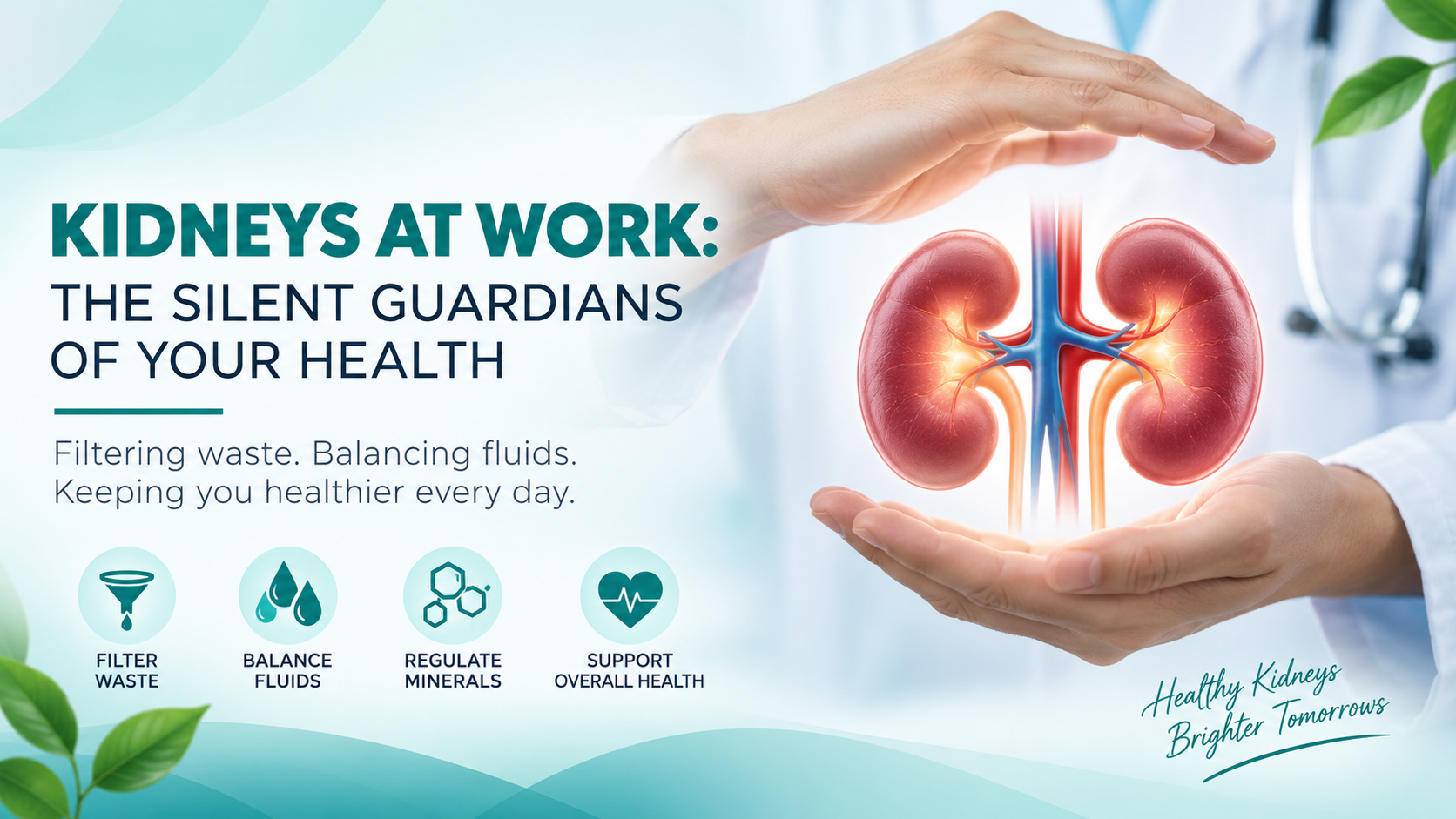
Kidneys at Work: The Silent Guardians of Your Health
Understanding kidney disease before it becomes irreversible
Why chronic kidney disease often goes unnoticed, who is most at risk, and why listening to your body—and checking your numbers—can make all the difference.
Most of us rarely think about our kidneys. We think about our heart when we climb stairs, our lungs when we run, or our stomach when something feels wrong. But the kidneys work quietly in the background—day after day—filtering waste from the blood, balancing fluids and electrolytes, and helping maintain the body's internal chemistry.
They do their work without asking for attention. And that is precisely what can make kidney disease so dangerous.
Chronic kidney disease (CKD) can develop gradually, often without obvious symptoms in its early stages. A person may continue working, travelling, caring for family and living what appears to be a completely normal life while kidney function slowly declines.
By the time noticeable symptoms appear, significant kidney damage may already have occurred. That is why kidney health deserves something more than occasional attention. It deserves awareness.
In a recent episode of Wellness Waves by Fortis Healthcare, Dr. Anuja Porwal, Additional Director of Nephrology at Fortis Hospital, Noida, discusses the important risk factors associated with chronic kidney disease and explains why understanding those risks and detecting problems early can make a meaningful difference.
The Silent Work of the Kidneys
The kidneys are much more than the body's filtration system.
These two bean-shaped organs continuously filter the blood, removing waste and excess substances through urine. They also help regulate fluid balance, maintain electrolyte levels, support blood-pressure regulation and contribute to the production of hormones important for red blood cells and bone health.
The remarkable part is that the body can often compensate when kidney function begins to decline. This means a person may lose considerable kidney function without feeling seriously unwell.
That silence can create a false sense of security.
Why CKD Can Hide in Plain Sight
One of the biggest challenges with CKD is that early kidney disease may have few or no noticeable symptoms.
There may be no dramatic pain, no sudden warning and no obvious sign that something is wrong.
As kidney disease progresses, some people may experience swelling, changes in urination, persistent tiredness, nausea and accelerated high blood pressure along with breathlessness. However, these symptoms can have many causes and should not be used as the only way to identify kidney problems.
For people with risk factors, routine health checks can help identify changes before they become disruptive.
Feeling well does not always mean everything is well.
Major Risk Factors: Diabetes and Blood Pressure
Certain health conditions significantly increase the risk of kidney disease.
Diabetes
Persistently high blood sugar can damage the kidneys' delicate filtering structures over time. People living with diabetes should therefore pay particular attention to regular medical follow-up and kidney-health assessment.
High Blood Pressure
Uncontrolled high blood pressure can damage blood vessels in the kidneys and gradually affect their ability to function. At the same time, kidney disease itself can contribute to high blood pressure.
Keeping blood pressure under control is therefore an important part of protecting kidney health.
Other Risk Factors to Know
A family history of kidney disease, cardiovascular disease, obesity, smoking and certain long-term medication use may also increase risk in some individuals.
The key is not to live in fear of these factors, but to understand them. Knowing your risk gives you an opportunity to act.
The Numbers That Matter
You do not need to be a medical expert to pay attention to your kidneys. A few routine checks can provide important clues.
- Blood pressure can reveal whether hypertension may be putting additional stress on the kidneys
- Blood sugar is particularly important for people with diabetes or those at risk of developing it
- Kidney-function blood tests help doctors assess how effectively the kidneys are filtering waste
- Urine testing can detect substances such as albumin or protein, which may indicate kidney damage
These are relatively simple evaluations, but they can provide valuable information—especially for people with known risk factors.
Small Habits, Significant Protection
Protecting kidney health does not necessarily require dramatic changes. It often begins with the basics: eating a balanced diet, staying physically active, maintaining a healthy weight and keeping diabetes and blood pressure under control.
Avoid smoking and unnecessary self-medication. Painkillers and other medicines should be taken responsibly and, where appropriate, under medical guidance.
Hydration also matters, but individual needs can vary, particularly for people who already have kidney or heart conditions. Following personalised medical advice is therefore important.
Most importantly, people with risk factors should not wait for symptoms before seeking appropriate evaluation.
Your Kidney Health Checklist
- Do I know my blood-pressure numbers?
- Have I checked my blood sugar?
- Have I ever had a kidney-function test?
- Do I frequently take painkillers without medical advice?
- Does kidney disease run in my family?
- Have I noticed swelling, changes in urination or persistent unexplained fatigue?
- Have I discussed my kidney-health risk with my doctor?
Don't Wait for a Symptom
Perhaps the most important lesson in kidney health is simple: Prevention often begins before you feel anything is wrong.
We are accustomed to seeking medical help when something hurts. But many chronic conditions do not announce themselves with pain. Kidney disease can be one of them.
A blood-pressure reading. A blood test. A urine test. A conversation with your doctor. These may seem like small steps, but they can become important pieces of a much larger picture.
Healthcare is not always about reacting to illness. Sometimes, it is about finding a problem early enough to change the story.
A Quiet Reminder
Your kidneys do not ask for much attention. Perhaps that is exactly why we should give them some.
Kidney health is not simply about avoiding dialysis or kidney failure. It is about protecting the everyday life we often take for granted—working, travelling, spending time with family and growing older with greater independence.
Prevention can begin with something remarkably simple: knowing your numbers, managing existing health conditions, taking medicines responsibly and asking the right question at the right time.
"How healthy are my kidneys?"
Because CKD may be quiet, but awareness does not have to be. When kidney problems are identified early, there may be more opportunity to manage risk factors, slow progression and protect kidney function.
Your kidneys have been working quietly for you every day. Perhaps it is time to start listening.
Kidneys at Work: The Silent Guardians of Your Health
Your Heart May Be Talking. Are You Listening?

Why Are More Young Adults Facing Nerve Damage, Numbness & Back Pain?
Robotic Uro-Oncology Surgery: Precision, Innovation and Better Patient Outcomes

Vape Culture: The Hidden Trap Among Youth

Flu Cases Rise in NCR: Dr. Abhijeet Singh on Symptoms, Treatment & Prevention