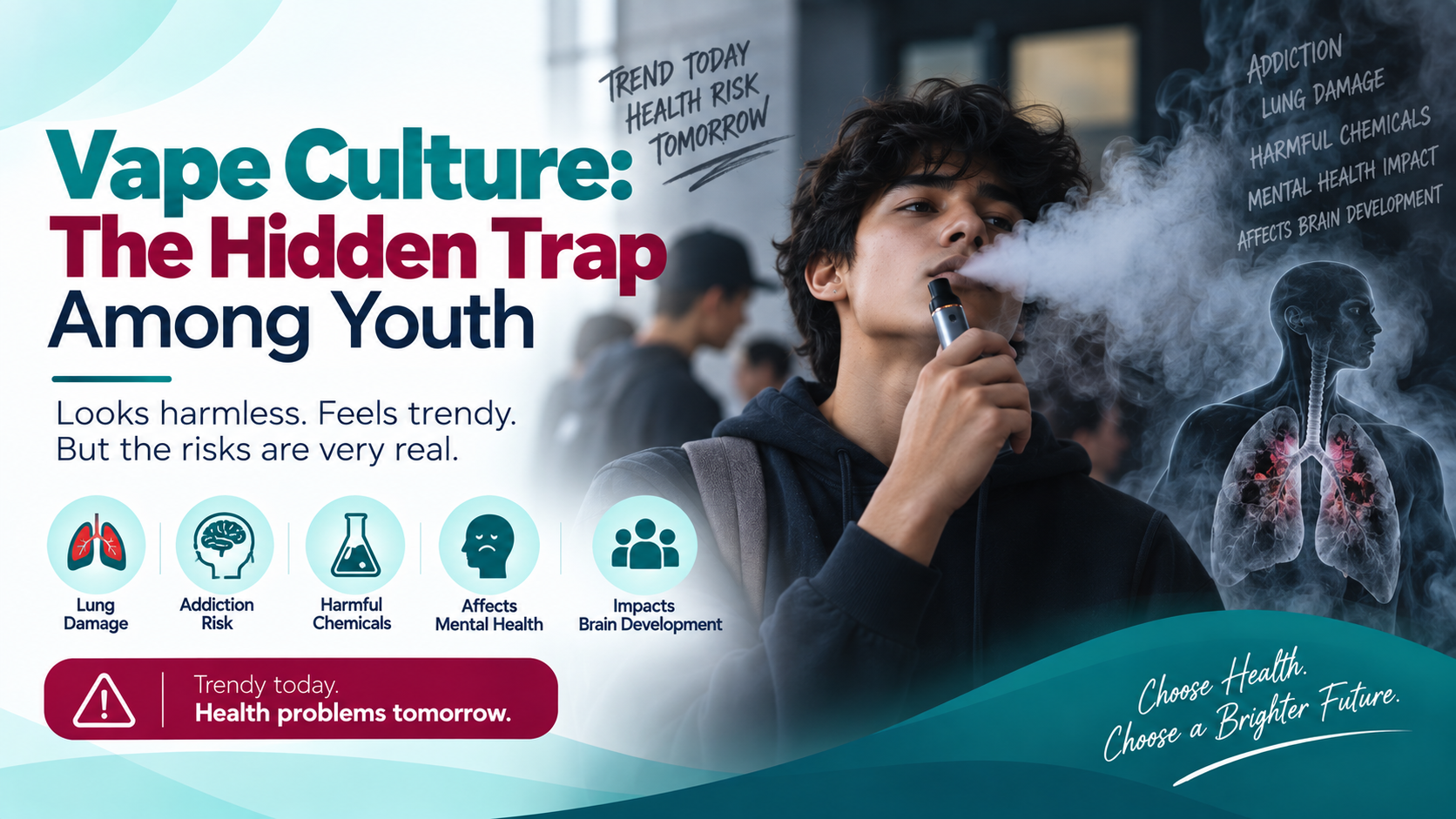
Vape Culture: The Hidden Trap Among Youth
By Dr. Mudit Agarwal
In recent years, vaping has evolved from a niche trend into a widespread phenomenon among teenagers and young adults. Sleek devices, attractive packaging, fruity flavors, and aggressive digital marketing have transformed e-cigarettes into symbols of a modern lifestyle. Unfortunately, behind this appealing image lies a growing health concern that many young people fail to recognize.
During a recent discussion, Dr. Mudit Agarwal highlighted the dangers associated with the increasing popularity of e-cigarettes and nicotine-based products among the younger generation. The conversation emphasized that vaping should not be viewed as a harmless alternative to traditional smoking but rather as a significant public health challenge that requires immediate attention.
One of the primary reasons for the rapid growth of vape culture is the widespread misconception that e-cigarettes are safer than conventional cigarettes. Many users believe that because vaping does not involve burning tobacco, it carries little or no health risk. This misunderstanding has encouraged thousands of young people to experiment with vaping without fully understanding its consequences.
The Nicotine Problem
The biggest concern associated with e-cigarettes is nicotine. Most vaping devices contain nicotine in varying concentrations, and many users are unaware of how much they consume every day. Nicotine is a highly addictive substance that affects the brain's reward system.
Adolescents are particularly vulnerable because their brains are still developing. Regular exposure to nicotine can lead to dependence, impaired concentration, mood changes, and long-term addiction.
Dr. Agarwal pointed out that the addictive potential of nicotine delivered through vaping may be even greater than that of traditional tobacco products. This makes vaping especially dangerous for young users, many of whom begin experimenting with flavored products without realizing that they are developing a strong dependency.
Social Media and the Normalisation of Vaping
Social media has further accelerated the rise of vaping. Online platforms have created an environment in which vaping is often portrayed as fashionable and socially acceptable. Influencers, viral videos, and targeted advertisements frequently present e-cigarettes as symbols of independence and sophistication.
For impressionable teenagers, this constant exposure can normalize a habit that carries serious health risks.
Stress as a Driving Factor
Another important factor discussed by Dr. Agarwal is stress. Modern lifestyles expose young people to increasing levels of academic pressure, professional competition, social expectations, and digital overload.
As stress levels rise, many individuals look for quick and easily accessible coping mechanisms. Vaping has become one of those outlets. However, using nicotine to manage stress creates only temporary relief while increasing the likelihood of long-term dependence.
A Collective Solution
The solution to this growing problem requires a collective effort.
What Needs to Happen
- Parents must communicate openly with their children about the realities of vaping
- Schools should introduce educational programs that provide evidence-based information about nicotine addiction
- Healthcare professionals should actively participate in awareness campaigns and encourage early intervention
Equally important is the need to address the root causes that drive young people toward vaping. Promoting mental health awareness, encouraging physical activity, and teaching healthy stress-management techniques can help adolescents develop better coping strategies. Creating supportive environments at home and in educational institutions can also reduce the appeal of harmful habits.
Vaping Is Not Harmless
Vape culture may appear modern and harmless, but its consequences can be severe. The attractive flavors and stylish designs often conceal the fact that e-cigarettes are primarily nicotine delivery devices.
Unless greater awareness is created, the growing popularity of vaping could lead to a new generation struggling with nicotine addiction.
The Message from Dr. Mudit Agarwal
The message from Dr. Mudit Agarwal is clear: vaping is not a lifestyle choice to be celebrated. It is a hidden trap that demands greater awareness, responsible conversations, and immediate action to protect the health and future of young people.
About the Expert
Dr. Mudit Agarwal

Kidneys at Work: The Silent Guardians of Your Health

Your Heart May Be Talking. Are You Listening?

Why Are More Young Adults Facing Nerve Damage, Numbness & Back Pain?
Robotic Uro-Oncology Surgery: Precision, Innovation and Better Patient Outcomes
Vape Culture: The Hidden Trap Among Youth

Flu Cases Rise in NCR: Dr. Abhijeet Singh on Symptoms, Treatment & Prevention